Financial scams rarely begin with something that looks absurd. The better ones look ordinary. A broker website. A trading app. A private signal group. A crypto platform. A fake support agent. A recovery firm. A bond offer. A managed account. A message from someone who seems to know the market and uses just enough real terminology to sound credible.
That is why traders and investors need to treat scam risk as part of capital protection. Market risk is obvious. A trade can move against you. A company can miss earnings. A currency can react badly to a central bank decision. A crypto token can fall through the floor, then keep digging. Scam risk is different. It sits before the market risk. It is the risk that the broker, platform, adviser, fund or payment route was never legitimate in the first place.
The basic defence is not complicated, but it is often skipped. Verify the firm. Check the regulator. Read the withdrawal terms. Confirm the payment recipient. Question any guaranteed return. Keep control of accounts and devices. Slow down when someone wants speed.
A broad trading safety checklist can help frame this as a normal part of account setup, not a panic measure after a withdrawal fails. The goal is simple: decide whether the person or platform asking for money can survive basic scrutiny.
Scams work because they copy real finance. They use real market language, real price feeds, real company names, real regulator names, real crypto terms and real social media platforms. The fraud is usually not in the vocabulary. It is in the false identity, the payment demand, the blocked withdrawal, the fake proof, or the pressure to move before checking.
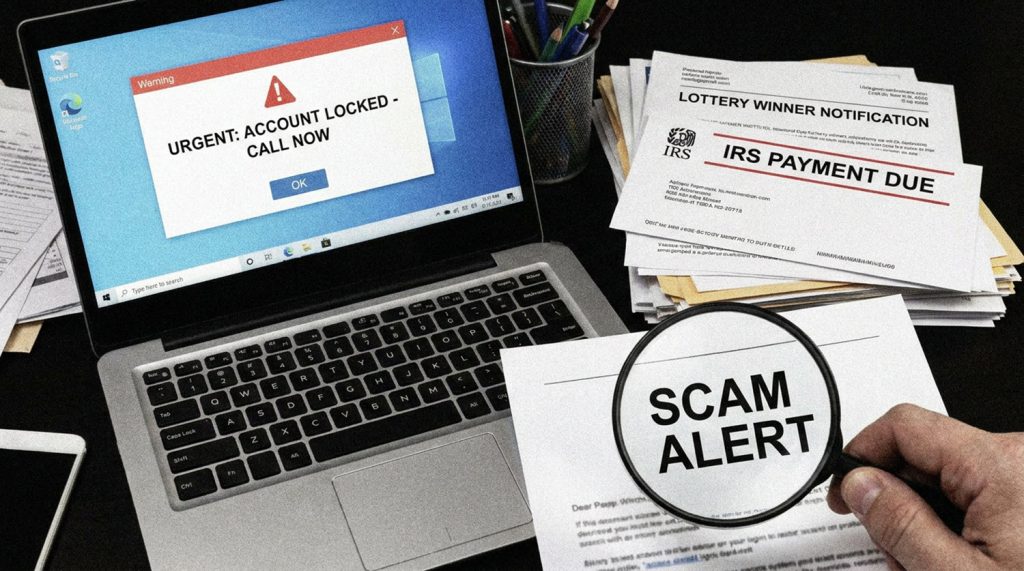
Why Financial Scams Work On Traders
Traders are attractive targets because they already accept uncertainty. They know price can move fast. They know missed opportunities happen. They know leverage can magnify outcomes. A scammer does not need to persuade a trader that a stock can rise quickly or that crypto can move hard in a day. The trader already knows that. The scammer only has to attach that knowledge to a false opportunity.
The pitch usually includes one or more familiar ideas. Early access. Private allocation. AI trading. Institutional flow. Insider style research. Copy trading. Crypto staking. Liquidity mining. Premium signals. Managed accounts. Recovery of lost funds. These phrases are not automatically fraudulent. Some refer to real products or services. The problem is that scammers use the same language because it lowers resistance.
The Federal Trade Commission’s guide to investment scams warns that scammers often promise high returns, low risk and quick profits. That is still the central pattern. The details change, the structure does not. A person is told they can make unusually good money with unusually little downside, and they are encouraged to act before doubt has time to do its job.
Urgency is the pressure tool. The trade is closing. The account bonus expires. The analyst has one opening left. The fund accepts deposits only this week. The token lists tomorrow. The withdrawal can be released only after a fee is paid today. This kind of pressure is designed to make due diligence feel like hesitation.
Traders are also vulnerable to regret. Anyone who follows markets has watched a move they did not take. The stock that doubled. The coin that ran. The index breakout that held. The options contract that went from cheap to silly. Scammers know this. They do not always sell greed. Often they sell relief from the feeling of missing out.
There is also the problem of partial knowledge. A complete beginner may ask basic questions because everything feels unfamiliar. A trader with basic knowledge may hear terms like liquidity, spread, margin, staking, custody, slippage, arbitrage or hedging and think the offer sounds plausible. Familiar language can create false comfort. Knowing the words does not prove the seller is legitimate.
The SEC’s guidance on avoiding investment fraud tells investors to research independently and not rely only on information from the person selling the investment. That point matters. Scammers can provide documents, certificates, testimonials, dashboards and explanations. Independent checks are needed because the seller has every reason to keep the story tidy.
A financial scam usually beats patience, not intelligence. It makes the victim move fast, stay quiet, and believe the next step will fix the last mistake. That is why the boring checks matter.
Fake Brokers And Cloned Platforms
Fake broker scams are damaging because they imitate a normal trading relationship. The trader opens an account, uploads documents, deposits money, sees prices, watches balances move and may even place trades. The interface looks real. The support agent replies. The account manager sounds professional. The profit number rises.
Then the trader tries to withdraw.
That is often when the platform changes character. The withdrawal is delayed for tax clearance, wallet verification, anti money laundering approval, liquidity fees, account upgrades, settlement charges, trading volume requirements or margin repair. The trader is told one more payment will release the balance. Then another fee appears.
Real brokers can have withdrawal checks and fees. They can ask for identity documents. They can review suspicious transactions. That is normal enough. What is not normal is demanding fresh deposits before releasing existing funds. A legitimate charge can usually be deducted from the account balance under written terms. A fake fee is often payable separately because the balance on the platform is not real money.
Cloned broker scams add another layer. A fraudster copies the identity of a legitimate firm. The fake site may use the real firm’s name, logo, licence number, address or staff names. The victim checks the name online and finds a regulated company. That creates confidence. The trap is that the victim has checked the existence of a firm, not whether they are dealing with that firm.
A useful guide to cloned broker warning signs explains how fraudsters imitate legitimate trading firms and use copied details to mislead traders. The important check is not just the brand name. It is the exact website, email address, phone number, legal entity, regulator entry and payment account.
Small differences matter. A cloned site may add a word to the domain, change the ending, use a similar email address or provide a mobile number instead of the official number listed on the regulator’s register. It may ask for payment to an unrelated company or a personal account. It may move communication onto WhatsApp, Telegram or another private channel. Each mismatch should be treated as a serious warning.
The FINRA red flags guidance tells investors to watch for account discrepancies, pressure tactics and other warning signs. With fake brokers, the account discrepancy is often hidden until withdrawal. The displayed balance may show profit, but the actual money trail says something else.
Fake trading platforms also use account managers. The manager calls regularly, explains market moves, praises the trader, and encourages larger deposits. At first, the trader may deposit a small amount. The platform shows gains. The manager then suggests a larger account size, a premium tier, a protected strategy, or an opportunity that requires fast funding. The relationship feels personal, which is exactly the point.
Some platforms allow a small early withdrawal. This does not prove legitimacy. It may be a confidence trick. A small withdrawal can convince the victim that the system works, making larger deposits easier to extract later. The scammer gives back a little to get much more. Old trick. New website.
There is a useful distinction between a risky broker and a fake broker. A regulated broker can offer high risk products where traders lose money. Forex, CFDs, futures, options, crypto derivatives and leveraged products can all lead to real losses without fraud. A fake broker lies about authorisation, fabricates balances, blocks withdrawals, manipulates the platform or demands extra payments to release funds.
Traders should never treat a good looking platform as proof. Web design is not regulation. A price chart is not custody. A support chat is not investor protection. A logo is not a licence. A firm should be verified outside its own website before a deposit is made.
Social Media, Signal Rooms And False Proof
Social media has made scam distribution cheap. A fraudster can create a profile, buy followers, post market commentary, use edited screenshots, copy another person’s image and push viewers into private chats. The result can look like a trading community even when it is mostly theatre.
The usual funnel is simple. A public post claims strong returns, a high win rate, private signals, a secret trading method, an AI bot, early crypto access or a managed account. The viewer is sent to a private group on Telegram, WhatsApp, Discord or another platform. Inside the group, people appear to be making money. They post screenshots, thank the mentor, celebrate withdrawals and encourage new members to act quickly.
Some of those accounts are fake. Some may be earlier victims still hoping the platform is real. Some may be paid promoters. The effect is the same. Doubt starts to feel lonely.
The FINRA guidance on avoiding fraud explains that fraudsters often use pressure, emotion and trust building. Social media is built for all three. A scammer can build familiarity through repeated posts, emotional language, public replies and direct messages. By the time money is requested, the victim may feel they are dealing with someone known rather than a stranger.
False proof is everywhere. A profit screenshot does not prove real trading. A dashboard balance does not prove funds exist. A withdrawal screenshot does not prove the platform pays everyone. A celebrity photo does not prove endorsement. A comment section does not prove trust. Screenshots are easy to make, edit, buy or stage.
Signal rooms create another problem. A trading idea can look stronger when many people appear to agree. This is dangerous because markets do not care how loud a chat group is. A trade still needs a thesis, risk control, execution and a realistic understanding of probability. Group excitement is not analysis. It is just noise with usernames.
Some signal groups are not direct scams, but still create poor outcomes. They may push overtrading, unrealistic win rates, low quality brokers, hidden affiliate deals or paid upgrades. A provider may profit when members deposit with a broker, regardless of whether those members trade well. That conflict should be understood before trusting any recommendation.
Fake authority also matters. Scammers impersonate trading educators, analysts, brokers, regulators, lawyers and well known investors. A fake account may copy a real person’s photo and use a near identical username. It may offer private coaching, account management or recovery help. The real person may have no connection to the message.
The safe approach is to treat social media as an idea source, not a verification source. A post can introduce a concept. It cannot confirm a broker. A video can explain a market theme. It cannot prove a strategy. A private group can create discussion. It cannot replace due diligence.
Crypto Scams And Recovery Fraud
Crypto has become a major route for financial scams because it combines fast transfers, global access and technical language that many victims do not fully understand. This does not mean crypto itself is automatically fraudulent. It means scammers like the payment rail and the confusion around it.
The FBI’s cryptocurrency investment fraud guidance describes scams where victims are persuaded to send funds into fake investment platforms controlled by criminals. The victim may see profits on screen, but the money has already moved to wallets controlled by the scammer.
A common crypto investment scam begins with a relationship. The scammer may contact the victim through social media, a dating app, a professional network or a wrong number message. The conversation may not start with finance. Over time, the scammer introduces an investment platform, shows apparent returns, and offers to help the victim trade or invest. The platform looks profitable until withdrawal is requested.
Then come the fees. Tax clearance. Gas fees. Wallet verification. Liquidity unlocking. Node activation. Smart contract release. Anti money laundering approval. Some terms resemble real crypto mechanics, which makes them more convincing. But a real term can still be attached to a fake demand.
Wallet theft is another risk. A victim may connect a wallet to a malicious site, sign a harmful approval, enter a seed phrase, install remote access software or follow fake support instructions. Once control is given away, assets can disappear quickly. No legitimate exchange, broker, wallet provider or regulator needs a seed phrase. That sentence is not a guideline. It is a hard rule.
Payment routing is a basic warning sign across both crypto and traditional scams. A supposed broker should not ask for funds to be sent to an unrelated company, a personal account, a payment app, gift cards or a random wallet address. A real financial provider should have clear payment instructions connected to the legal entity providing the service.
Recovery fraud is one of the nastiest parts of the scam cycle. After someone loses money, a new party contacts them claiming to be able to recover it. The recovery agent may pose as a lawyer, investigator, blockchain analyst, regulator, bank officer or enforcement contact. They say the funds have been traced, but a fee is needed to release them.
A practical warning on fund recovery fraud explains how victims can be targeted again by people promising to retrieve lost money. This scam works because the victim is already under emotional pressure. They want the loss reversed. They want the displayed account balance to be real. They want the first scam to be a misunderstanding. The recovery scammer sells that hope.
Real recovery can happen in some cases through banks, card providers, exchanges, law enforcement or legal channels. But guaranteed recovery for an upfront fee is a serious warning. Anyone asking for seed phrases, wallet permissions, secrecy from authorities, tax payments to unlock funds, or more money before recovery should be treated as a fresh threat.
A victim who has paid once may be targeted repeatedly. The safest assumption is that personal details may have been shared. Every follow up approach should be checked from zero.
Warning Signs Before Funding An Account
A promise of high returns with little or no risk should stop the process. Markets do not provide large reliable profits to strangers without risk. Government bonds have yields. Bank deposits have limits and rules. Structured products have terms and issuer risk. Trading strategies can have edges and drawdowns. A private account manager promising smooth weekly profits is selling a story.
Urgency is another warning. A legitimate opportunity may have a deadline, but a scam depends on pressure. If the person selling the investment becomes annoyed when asked for time, documents or verification, that is useful information. A real firm can survive questions. A scam needs momentum.
Vague regulation is a major problem. Claims such as “globally licensed,” “internationally certified,” “registered financial partner” or “regulated investment platform” mean little without an exact legal entity and official regulator entry. Company registration is not the same as financial authorisation.
Payment mismatch should also stop a deposit. The account holder receiving funds should make sense. The legal entity should match the service. If the recipient is an individual, unrelated company, offshore processor or wallet address with no clear connection, the risk is high.
Withdrawal friction is one of the clearest warnings after funding. A platform that repeatedly demands fresh payments before allowing withdrawal is following a common fraud pattern. Tax fees, verification fees, liquidity fees and account upgrades may sound official, but the question is simple: why can the fee not be deducted from the balance?
Secrecy is another serious sign. Scammers may tell victims not to speak with banks, advisers, family or other traders. They may claim outsiders are jealous, banks block wealth, regulators do not understand, or critics are negative. This is not confidence. It is isolation.
Remote access requests should be rejected. A broker, adviser, exchange support worker or recovery specialist should not need full control of your device to help you deposit, verify, trade or withdraw. Remote access can expose bank accounts, passwords, email, trading accounts, identity documents and wallets.
Fake proof should be treated as weak evidence. Screenshots, testimonials, dashboard balances, luxury photos, recorded videos and private group comments can be fabricated. They may support a story, but they do not verify it.
Emotional handling is also common. The scammer flatters the victim for acting quickly and shames them for hesitating. They may call caution fear, and reckless action confidence. That is not professional advice. That is sales pressure wearing a cheap tie.
The final warning is complexity that always ends with another payment. If every question creates more jargon and another fee, the issue is not complicated finance. It is an extraction script.
How To Check A Firm Before Sending Money
The first check is the exact legal entity. The name on the homepage is not enough. The trader needs the company name in the client agreement, payment instructions and legal documents. A brand can have several entities. Some may be regulated strongly. Some may be offshore. Some may not be connected to the real brand at all.
The second check is the regulator. Use the official register for the relevant jurisdiction. Compare the firm name, licence number, permissions, address, website, email and phone number. Similar details are not enough. Clone scams rely on near matches.
The third check is product permission. A firm may be authorised for one activity but not another. A company may be allowed to provide payment services but not investment advice. A broker may be regulated in one country but not permitted to serve retail clients elsewhere. The relevant question is whether this entity is authorised to offer this product to this client.
The fourth check is the payment route. The payment recipient should match the legal entity or a clearly disclosed custodian or payment processor. Payments to individuals, unrelated companies, payment apps or unexplained wallets should be treated as high risk.
The fifth check is withdrawal terms. Read the rules before depositing. Look for fees, bonus restrictions, account tiers, identity checks, processing times, inactivity charges and turnover requirements. Traders often obsess over spreads and forget withdrawal terms. That is backwards. A tight spread is not useful if the account is a prop in a scam.
The sixth check is complaint history. Reviews are messy, and not every complaint is reliable. Still, repeated patterns matter. Blocked withdrawals, pressure calls, surprise fees, cloned websites, changed domains and regulator warnings should not be ignored.
The seventh check is communication quality. A legitimate provider should answer basic questions in writing. Who regulates you? Where are client funds held? How do withdrawals work? What fees apply? What is the complaints process? If answers are vague or pushed into phone calls, treat that as part of the evidence.
The eighth check is personal security. Use unique passwords, multi factor authentication, account alerts and withdrawal controls. Do not share one time passcodes. Do not install remote access tools. Do not give seed phrases. Do not send extra identity documents unless the firm has been verified.
Verification is not exciting, but neither is explaining to your bank why you sent money to “Global Prime Treasury Settlement LTD” after a man on Telegram called you a serious investor.
What To Do If You Suspect Fraud
The first step is to stop sending money. Do not pay release fees, tax fees, upgrade costs, verification charges or recovery fees. Scammers often keep victims engaged by presenting one last step. There is usually another last step behind it.
Save evidence quickly. Take screenshots of the platform, account balance, trade history, messages, emails, names, phone numbers, wallet addresses, transaction IDs, bank details, documents and websites. Export chat histories where possible. Fraud sites and chat accounts can disappear without warning.
Contact the bank, card provider, exchange or payment service used. Ask whether the transaction can be stopped, recalled, disputed, frozen or flagged. With crypto transfers, recovery is harder, but fast reporting may help if funds move through an identifiable exchange.
Report the fraud through official channels. In the U.S., internet enabled fraud can be reported through the FBI Internet Crime Complaint Center. Securities issues can be reported through the SEC complaint process. Broker related complaints can be submitted through FINRA’s complaint process. Consumer scams can be reported through the FTC fraud reporting portal. Traders outside the U.S. should use their national financial regulator, police cybercrime unit and consumer protection agency.
Tell someone you trust. Fraud thrives on silence and embarrassment. A second person can help organise evidence, stop further payments and judge new contact from supposed recovery agents.
Avoid anyone promising guaranteed recovery. A victim may be contacted by new scammers after reporting or discussing the loss. Any recovery offer involving upfront fees, seed phrases, wallet access or secrecy from authorities should be rejected.
Final Warning
Financial scams work because they make false trust look ordinary. They copy broker websites, regulator language, social proof, crypto terms and professional manners. They do not need to fool every trader. They only need to rush one deposit.
A real firm can be verified. A real broker can answer in writing. A real investment can explain risk. A real withdrawal process does not need endless fresh payments.
Traders and investors already face market risk. Scam risk is different because there is no upside. Slow down before sending money. Check the firm, the regulator, the payment route and the withdrawal rules. The most useful trade is sometimes the one you refuse to fund.